Yemen’s STC: The rise and fall of a failed southern experiment.
By Triton Wong
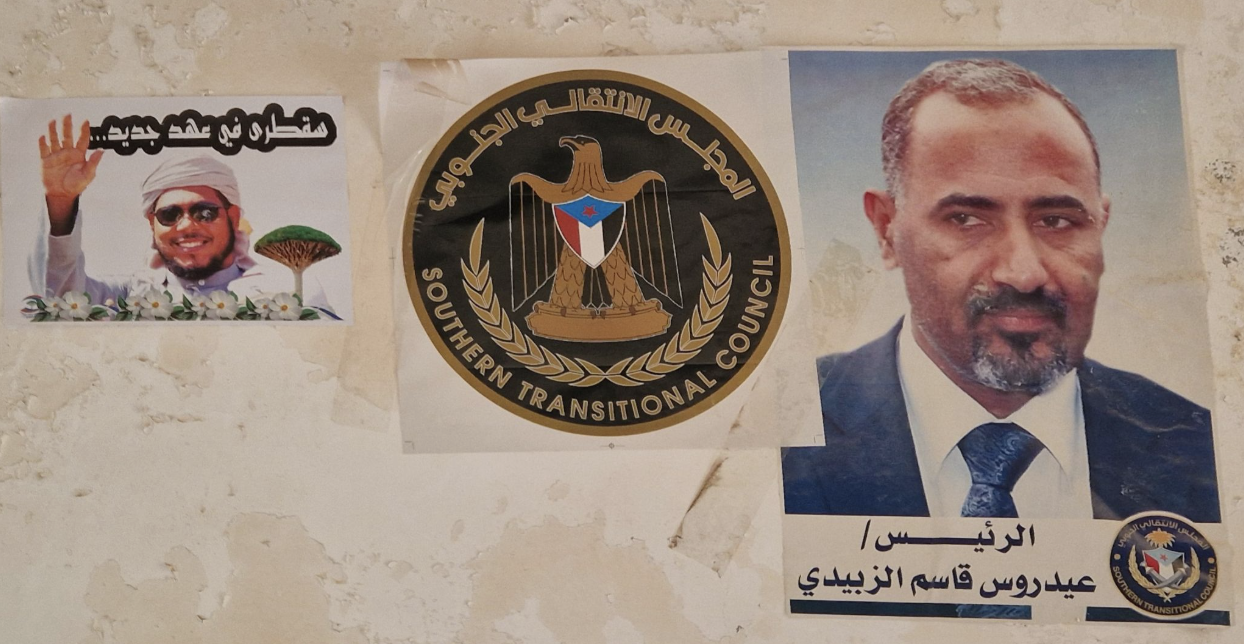
Between December 2025 and January 2026, over the course of just over a month, the de facto map drawn by Yemen’s numerous warring factions was torn up and redrawn. To the surprise of many, this rapid series of events was not driven by the internationally recognised government’s decade-long conflict with the Houthi rebels, their main rival, but by a violent fracture within the government’s anti-Houthi coalition. This fracture spiraled from a dramatic offensive launched by the UAE-backed Southern Transitional Council in December of 2025, a former ally of the government, briefly establishing control over more than half of Yemen’s territory. This ended in January 2026, with not only the STC losing all of its gains but also the Council’s dissolution and its leaders on the run. The 2025–2026 Southern Yemen campaign marks one of the most significant geopolitical shifts in Yemen’s civil war, revealing deep cracks in the anti-Houthi alliance and reshaping the situation of the war-torn state.
The STC’s gamble began on December 2, 2025, in an operation codenamed “Operation Promising Future,” its forces swept north from coastal strongholds in the south into the sparsely-populated but oil-rich governorates of Hadramout and Al-Mahrah. The speed of their advance shocked many international observers and within 48 hours, they had captured key cities like Seiyun and Tarim, seizing major military bases and government headquarters with minimal resistance from both the internationally recognised government or its backer Saudi Arabia. And by December 9, the STC had taken control of most areas across the six governorates that once made up the former nation of South Yemen.
The prize for the Southern Transitional Council was clear: Hadramout alone holds nearly 80% of Yemen’s oil reserves and is rich in natural resources. And for a separatist movement, like the STC, dreaming of a viable recognised independent state in South Yemen, controlling this wealth was indisputable. The STC framed its offensive as a liberation of the “soil of our homeland, South Arabia,” and for a moment, it seemed like the revival of the state that existed until Yemen’s unification in 1990 was within reach and not a matter of if but a matter of when.
But the STC’s calculations fatally underestimate its powerful neighbour to the north, Saudi Arabia. The Saudis viewed the takeover of Hadramout, which shares a roughly 700-kilometer border with the Kingdom, as a direct threat to its interests in Yemen and to its national security. The STC, backed by the United Arab Emirates, had effectively moved a rival power’s proxy force onto Saudi Arabia’s doorstep, and the Saudis did not hesitate to strike back.
The turning point came on December 30, when the Royal Saudi Air Force struck the port of Mukalla, targeting what it claimed to be a UAE shipment of weapons destined for the STC-controlled Yemen. Having long been allies of the UAE, the Saudi military action against its assets were unprecedented and sent shockwaves across the region. The internationally recognised Yemeni government, led by President Rashad al-Alimi and backed by the Saudis, immediately declared a state of emergency and ordered all UAE forces to leave Yemen immediately.
With the UAE announcing a withdrawal of its remaining forces from Yemen hours after the demand from President al-Alimi, the STC was stripped of its crucial military and air support from its patron. And on January 2, 2026, government forces backed by Saudi Arabia, launched a counteroffensive against the STC. The STC’s military gains that it had built over the years, proved brittle and its forces were swiftly driven back, losing Seiyun on January 3 and Mukalla on January 4, and by January 7, government forces had entered the STC’s de facto capital, Aden, meeting nothing but weak and collapsed resistance.
The rapid unraveling of the military situation of the STC led to the collapse on the political front as well. STC President Aidarus al-Zubaidi was removed from the Presidential Leadership Council, previously made up of both STC and the internationally recognised government, and charged with treason. He reportedly fled by boat to Somalia, before safely arriving in the UAE by plane. The situation further deteriorated from the STC when its delegation in Riyadh announced the Council’s dissolution, in a move rejected by the group’s spokesman in Abu Dhabi as “ridiculous,” exposing a deep split within the STC’s movement. Amidst a power void to its south, Saudi Arabia positioned itself as the new arbiter of south Yemen’s future, announcing plans to host a "Comprehensive Southern Dialogue Conference" to address grievances in the south but keeping in line with its long-term policy of a unified and stable Yemeni state.
The fall of the Southern Transitional Council marks the end of one of Yemen’s most ambitious separatist experiments since unification and the end to what has long been seen as Yemen’s third force, rivalling the Houthis and the Presidential Leadership Council. What began as a confident and seemingly unstoppable push for self-determination dissolved in a matter of weeks, revealing not only the delicacy of factional alliances but also the decisive influence of external powers on Yemen’s battlefield. As Saudi Arabia consolidated control over the south and Yemen overall, preparing for its "Comprehensive Southern Dialogue Conference", the fate of Yemen once again lies in negotiations beyond its factions and borders. And while the dream of an independent South may fade over time, the divisions that fueled it remain far from resolved, as is the case with Yemen’s remaining factions: the Houthis and the Presidential Leadership Council.