Lebanon: The Next Gaza?
By Triton Wong
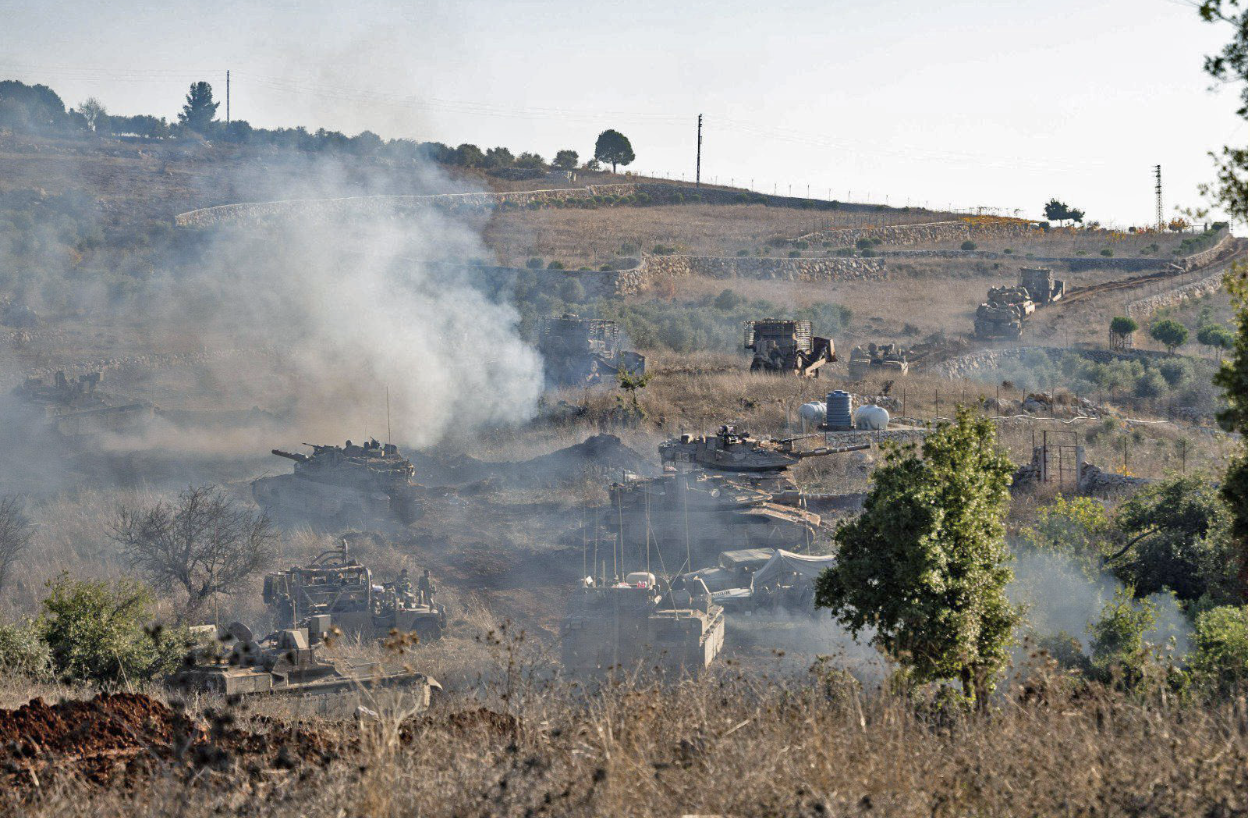
While most of the international community have been focused on watching the escalating war in Iran, a second front has been opened in Lebanon, where already more than 1000 Lebanese civilians have been killed and over one million have been displaced. Bridges lie shattered, entire villages flattened to the ground, and Israeli ground troops are pushing deeper and deeper in sovereign Lebanese territory. These images are a haunting reminder of the destruction and killing during the Gaza War and many fear that Israel is replicating the “Gaza model” along its northern border.
“The Gaza model must not be replicated in Lebanon,” UN Secretary-General Antonio Guterres warned on March 25. “Across the region, civilians are enduring serious harm and living under profound insecurity.” However, Israeli officials have already openly invoked Gaza as a template for its activities in Southern Lebanon. Defense Minister Israel Katz ordered troops to “accelerate the destruction of Lebanese homes in line of contact villages… in accordance with the model of Beit Hanoun and Rafah”, two Gaza towns that were obliterated during the war with Hamas. Katz also announced plans for a permanent “security zone” stretching to the Litani River, around 30 kilometers north of the Israeli-Lebanese border, and said displaced Lebanese residents would not be allowed to return until northern Israel was deemed safe, in line with the rhetoric made during the Gaza War.
The far-right Finance Minister Bezalel Smotrich went a step further, declaring that “the Litani must be our new border with the state of Lebanon”, which in practice is calling for the annexation of 8% to 10% of Lebanon’s total land area. Prime Minister Benjamin Netanyahu said the military was “creating a larger buffer zone”, effectively carving out Lebanese land in all but name.
This latest escalation was caused by a joint US-Israel operation in late February that killed Iran’s supreme leader, Ayatollah Ali Khamenei. Hezbollah, a Lebanese paramilitary group that maintains close ties with Tehran, responded with rocket fire against Israel, framing it as retaliation for this unprecedented escalation. In response, on March 2, Israel unleashed one of the most intensive bombing campaigns in Lebanon’s modern history, killing more than 1000 people and wounding up to 3000, according to Lebanese health authorities.
Hezbollah, for its part, has continued its attacks, launching 54 strikes on March 23 and more than 80 on March 25, the largest daily number since fighting began. Over 2000 projectiles have been fired by the group toward Israel, causing four deaths on the Israeli side. However, there is a great disparity in destruction with more than 1 million Lebanese now displaced, nearly one fifth of the population, as Israel’s evacuation orders cover approximately 1470 square kilometers, or 14 percent of Lebanese territory.
Furthermore, UN peacekeepers have reported that fighting has reached their positions with bullets and shrapnel striking their headquarters. “This conflict has broken past the limits even leaders thought imaginable,” Guterres told reporters. “The world is staring down the barrel of a wider war.”
The Israeli campaign has systematically dismantled southern Lebanon’s infrastructure. Airstrikes destroyed all three main crossings over the Litani River, cutting off the southern districts of Tyre and Bint Jbeil from the rest of the country and isolating an estimated 150,000 civilians. In addition to this, water pipelines, power stations, and agricultural land have been hit. According to the Lebanese health ministry, 64 attacks on healthcare facilities have killed 51 health workers and wounded 91 others.
“The Lebanese people did not choose this war,” Guterres declared during a visit to Beirut earlier this month. “They were dragged into it.”
Lebanon’s year-old reformist government initially took unprecedented steps by banning Hezbollah’s military activities, ordering the expulsion of Iran’s ambassador, and even proposing direct negotiations with Israel, a longstanding controversial topic. However, the government has not enforced the ban, cautious of igniting a potential civil war. The Lebanese army, underfunded and ill-equipped, is powerless to confront Hezbollah or the Israeli army, and has thus largely withdrawn from border areas to avoid being pulled into the war.
Analysts have noted that the government in Beirut finds themselves trapped between an expansionist southern neighbour and a powerful domestic armed faction. “The Lebanese authorities face a brutal choice: confront Hezbollah or watch Israel do it for them,” said Faysal Itani, senior fellow at the Middle East Policy Council.
Hezbollah’s leader, Naim Qassem, has rejected any negotiations under fire, calling it “surrender.” With Iranian advisers now playing a more direct role in Hezbollah’s operations, the group has shown no willingness to stand down while Lebanese territory is being seized.
For now, a ceasefire looks highly unlikely, with Israeli leaders describing the campaign as “prolonged.” Lebanese President Joseph Aoun has accused Israel of seeking “to establish a buffer zone, entrench the reality of occupation, and pursue Israeli expansion within Lebanese territories.”
As Lebanon fights for its sovereignty, Lebanese civilians face a heartbreaking question of whether they will ever return home. Elias Konsol, a resident of the Christian border village of Alma al-Shaab told the Associated Press after evacuating with UN help: “We no longer know our fate. We don’t know if we will see our homes and village again." Spanish Prime Minister Pedro Sanchez put it bluntly: “It’s not fair that someone sets fire to the world and the rest of us have to swallow the ashes.”
It remains to be seen whether Lebanon will suffer the same fate that Gaza faced, but as bombs continue to fall on towns that have never posed a threat to Israel, the warnings from the international community grows ever more urgent, and ever more ignored.