What’s behind Coca-Cola’s move to reduce sparkling water in vending machines?
By Stephen Donahue
In Hong Kong, it is easy to find Coca Cola’s red vending machines everywhere. They offer inexpensive refreshing drinks on the go - usually in price margins between six to twenty Hong Kong dollars - a good deal to most. These vending machines gain a rough profit margin of 22,180,00 million dollars annually, with a gradual increase of profits as inflation rises, and demand increases. There are roughly only 6,000 of these machines in Hong Kong, so why is the profit margin so high? In 2023, only half of these machines had drinks without sugar, 3,600 out of 6,000. In 2025, only 800 of these machines offer sugar free options. This news article reveals how Coca Cola, through its Hong Kong bottler Swire, plans to dominate vending profits by phasing out non-sweet options to addict consumers to sugar.
The Economics of Convenience
Vending machines are cultural staples, providing an effortless way to purchase items without visiting a store. Operators often use this convenience to justify steep markups.
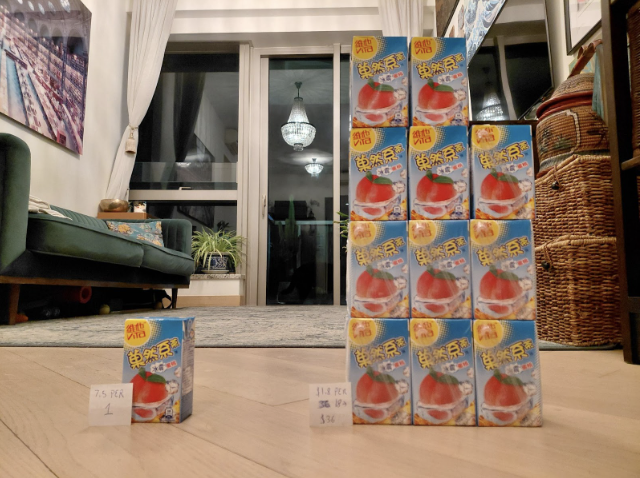
For example, a school vending machine might sell a Vitasoy peach drink for 7.5 HKD. If you were to buy that same drink in bulk at a local grocery store like Wellcome or Fusion, the price per unit drops to roughly 1.8 HKD. The markup is astronomical, but consumers pay it for the immediacy. But high prices are only part of the profit equation—the type of product matters even more.
The Neuroscience of Profit
Why the shift away from sparkling water? The answer may lie in biology. Vending machines already trigger dopamine—the brain’s “wanting” chemical—through anticipation and reward. The act of inserting coins or tapping an Octopus card builds excitement until the product drops.
Sugary drinks like Coke (which contains 35g of sugar per 330ml, or roughly 7 tablespoons) amplify this effect. Sugar triggers a dopamine spike in the mesolimbic pathway, creating cravings and tolerance similar to addictive substances. This biological loop demands repeat purchases. Sugar-free sparkling water, while refreshing, does not trigger this same chemical "hook." In a nutshell, the strategy appears to be prioritizing products that create a chemical dependency.
The Investigation: Demand vs. Reality
Curious about the sudden disappearance of sparkling water brands (specifically the Aha line) from vending machines, I contacted Coca-Cola’s customer service posing as a concerned customer. Their response, received on November 20, suggested that consumer choice was to blame:
"Dear Stephen,
You may be interested to know that Aha has been discontinued. Many factors go into the decision to stop selling a particular product. Typically, it is a matter of consumer demand. If there is not enough consumer interest in a particular product, retailers will stop carrying it...
Sincerely, Alice, Digital PACS and Care Services – North America"
However, market data tells a different story. Contrary to claims of low demand, Aha captured 14-18% of the U.S. sparkling water market post-launch and helped drive the global sparkling category to USD 52.5 billion in 2025. Even after a dip in Q1 2023 due to delistings, sparkling beverages remained a growth engine globally. Coca-Cola’s overall sparkling soft drinks showed strong category viability even in Q3 2025.
The data suggests that the "low demand" excuse is a smokescreen. The reality is likely that while sparkling water is profitable, it is not addictive.
The Illusion of Choice
The contradiction between Coca-Cola’s official statements and market performance points to a larger truth: profitability—not consumer preference—drives the beverage landscape we encounter every day. Phasing out sugar-free sparkling water in vending machines isn’t about giving people what they want; it’s about teaching them what to crave.
Every fizzy button press on a vending machine becomes less of a choice and more of a conditioned response to sweetness—an invisible loop of habit forged by corporate strategy.
In Hong Kong, a city famed for convenience and speed, this subtle shift matters. With fewer low-sugar drinks available, consumers who depend on vending machines during work or school hours are nudged toward high-sugar options. They consume these "innocent" bottles of Coke without realizing they are reinforcing the profitability of sugar dependency on a massive scale.
So, the next time you tap your Octopus card and wait for that satisfying clunk of a can, ask yourself: Is this really your decision, or is it one that Coca-Cola made for you?