EU’s “Chat Control” proposal raises various privacy concerns and violates human rights
By Princeton Chiu
The EU’s “Chat Control” proposal should not be allowed to pass, as it infringes on rights to privacy outlined in the EU Charter of Fundamental Rights articles 7 & 8, and raises a variety of concerns to its possible impacts including but not limited to the freedom of expression and the economy.
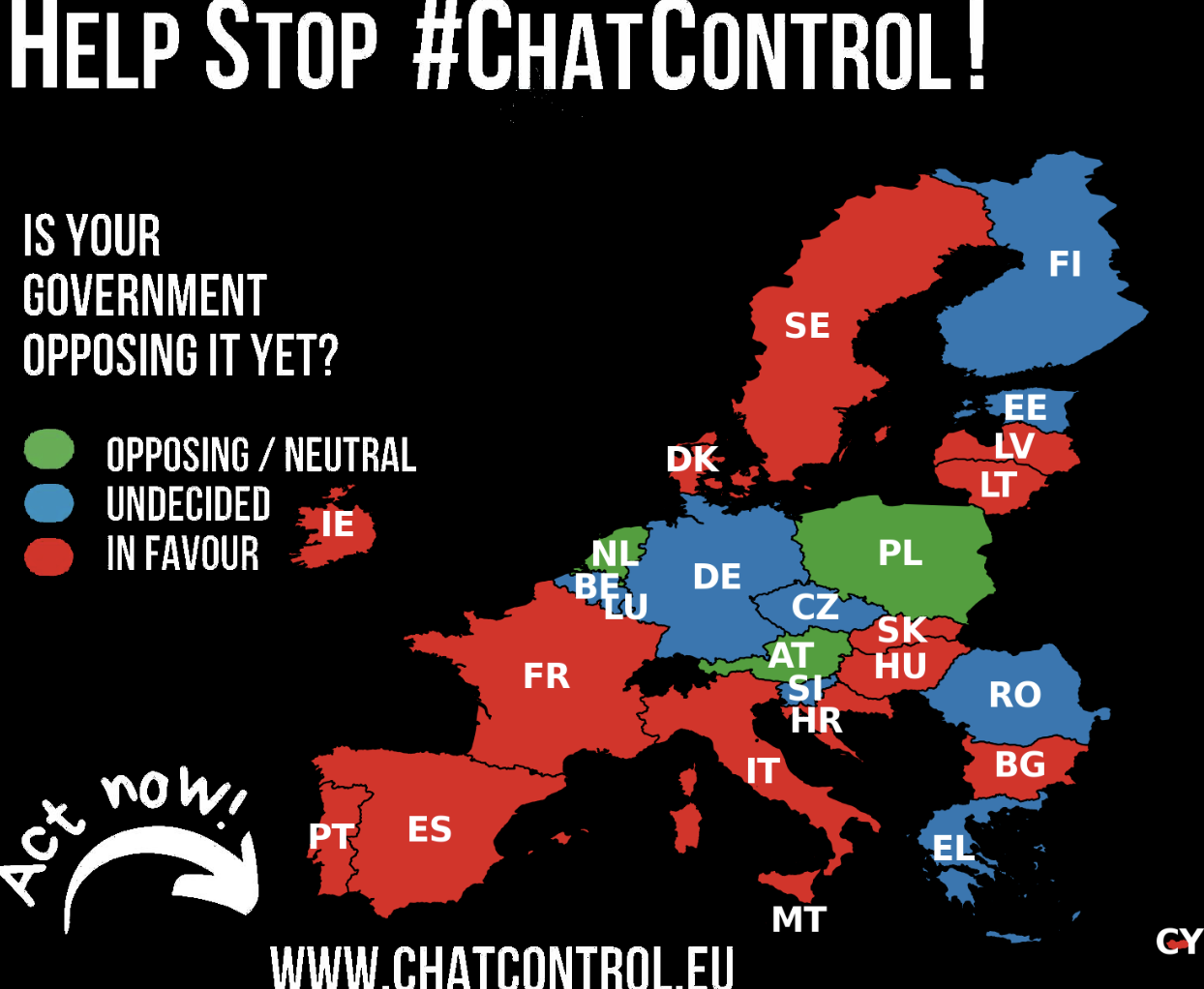
As of the 6th of August, 2025, 19 member states support a plan to scan all private messages on apps such as Whatsapp or Telegram, requiring encrypted messages to be scanned before they are encrypted.
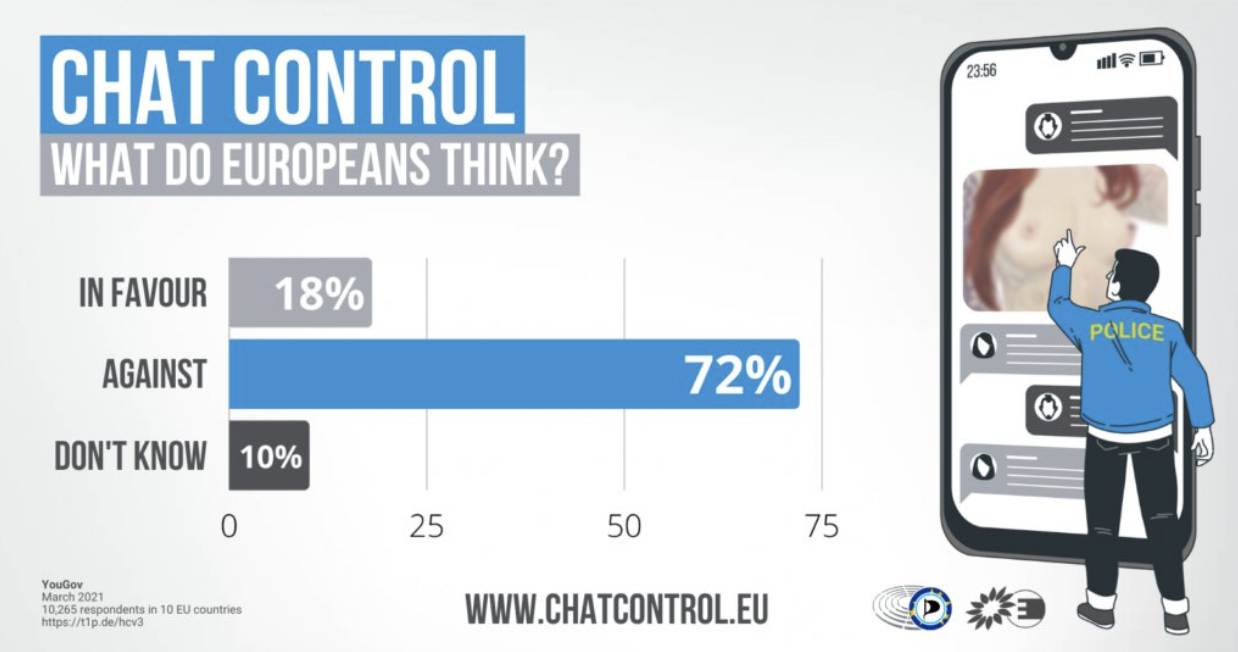
“Chat Control”, also known as the Regulation to Prevent and Combat Child Abuse was originally proposed on May 11, 2022. Prior to the proposal, 2022 public consultations show that 80% of stakeholders and citizens oppose the mandatory implementation of chat control, especially in end-to-end encrypted communication services.
The proposal is intended to bring a number of merits and advantages for government authorities. By mandating communication services scan private messages, it aims to determine and report suspicious messages to local authorities to prevent crimes before they happen, with the primary goal of preventing further victims of child abuse. These laws could allow governments to maintain absolute control, detecting and countering possible threats before they can cause any credible damage.
With Denmark pushing for the implementation of “Chat Control”, another vote will be held on October 14th 2025, with Denmark pushing for opposing/neutral countries such as Poland or the Netherlands to vote in support of the proposal. Countries such as the Netherlands have abstained their votes, as a certain number of “yes” votes is needed for a consensus. The act of abstaining from voting is equivalent to opposing the idea, and I believe that they are right in this decision.
There are various reasons why the proposal should not be allowed to pass:
First and foremost, the proposal undermines privacy and basic rights to freedom. Breaking encryption could make it easier for third parties, such as hackers or criminals to access private data. Additionally, AI scanners are used alongside algorithms for automation and “confidentiality”, but an AI scanner will likely require private access to messages to function. As such, it is possible that those within the company could infiltrate or access information sent through these services.
Although the proposal allows tech companies to choose their method of scanning, this use of detection could not only be focused on suspicious individuals, rather it could also be ordered to monitor all communications within the services, which is “mass surveillance without probable cause.” Such a proposal violates articles 7 and 8 of the EU Charter of Fundamental Rights, which is supposed to protect the rights to the privacy of personal data, and private/family life. For example, in article 8, one of the statements is “Everyone has the right to the protection of personal data concerning him or her”, and through chat control, the people’s personal data cannot be effectively protected. The proposal allows scanning all your photos, messages, and files even without reason to suspect you of a crime, thus accessing them and increasing the risk of a data breach.
Additionally, it could be detrimental to people working in professions such as law and journalism, as the proposal could cause them to lose their confidentiality. Tech companies such as Whatsapp and Telegram have threatened to pull out of the UK due to the online safety bill, and “Chat Control” will likely impede technological advances, heighten costs for tech companies and perhaps cause them to move out of the European market as a whole.
Furthermore, the AI could make false accusations, as they are prone to error. According to Gesellschaft für Freiheitsrechte (GFF), a non-profit based in Berlin dedicated to protecting human rights in court, AI can “only make an assumption based on the meaning of the content.” This could damage investigations and puts many people at risk of false accusations, identifying private jokes or innocent content as suspicious.
Finally, the European Court of Justice has already warned about the indirect negative impacts to the freedom of expression, with citizens worrying about freely expressing their opinions. Child protection experts and organizations (such as GFF or Germany's Federal Child Protection Association) including the UN have warned that “mass surveillance fails to prevent abuse.” There are already existing and proven security measures that could be taken, and diverting resources from those measures could weaken security not just for privacy, but for child abuse as a whole—which is what the EU is trying to fight.
Personally, I believe the proposal is fundamentally flawed, and should not be allowed to pass. Although I do not have an involvement with Europe, if this is allowed to pass, this might set a precedent for even more controversial bills to pass not just in Europe, but may perhaps spread to Asia as well. Economic complications of the proposal may have a global impact, including on tourism.
Thank you for reading my opinion on the EU's “Chat Control” proposal.