Even apples aren’t safe…
By Pia Tuominen
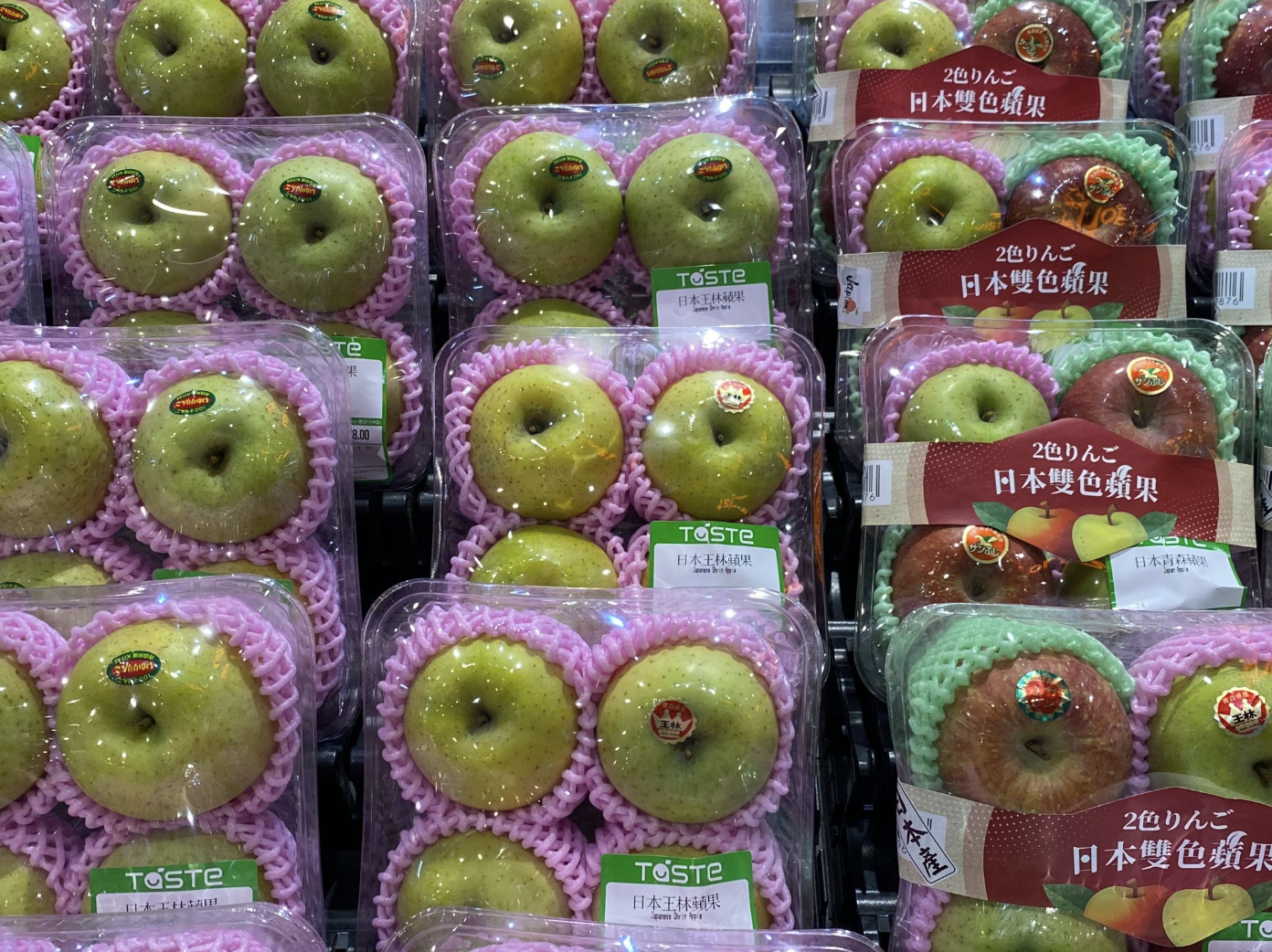
Green and red Japanese apples at supermarket Taste
Have you ever been to a store that sells food? If so, you’ve almost certainly seen something akin to the image above: firm green apples sat snugly in a box of translucent polyethylene terephthalate, nestled in a fluffy blanket of expanded polyethylene, and drenched in glimmering coatings of polyvinyl chloride. After all, these apples have been mailed straight from Japan, and to let these precious babies suffer a single bruise would be a disgrace!
1,500,000,000 kilograms of annual waste is generated from food packaging in Southeast Asia alone. The fluffy nets that we use to keep our peaches looking pretty will eventually end up in overflowing landfills or polluting our natural environments, fragmenting into micro- and nanoplastics that are ingested by plants and animals, including humans; and we all know how terrible plastics are when they enter living bodies, blocking nutrient absorption, increasing cell death and damage – the list is extensive. And let’s not even talk about the carbon emissions and pollution resulting from the fossil fuel extraction that produces these plastics.
But if single-use plastics are such a massive problem, why does it look like we are not doing anything about it?
Well, if you have ever poked a ripe mango at the wet market and immediately been reprimanded (threatened?) by the fruit seller, you will understand Southeast Asia’s obsession with maintaining the hygienic and unblemished appearance of fruit. A mango with a weird dent in it is far less attractive to customers than one with a surface as smooth as a baby’s eyeball, because of how development in agriculture has allowed us to become stringent, and the relatively well-off customer has now been accustomed to unnatural perfection in the fruit they eat. When wild apples fall off trees in nature, they easily gain little bruises, but we had absolutely no problem with this in paleolithic times, as these fruits were equally as delicious and nutritious as the rare immaculate specimen – provided they have not been contaminated and are eaten soon after, of course. Today however, we have been spoiled by modern lifestyles that encourage us to stay sedentary and stare at artificial, glowing surfaces all day, making us forget how valuable our food actually is.
To satisfy these unrealistic expectations, suppliers rely heavily on plastic packaging.These layers reduce the chances of fruit getting groped, thrown, poked, and dropped by careless citizens or curious children, but the packaging is used to ‘protect’ fruit is in reality a waste of money and resources, and may even lead to customers inadvertently purchasing fruit that is rotten under the masses of plastic.
The problem scales exponentially with luxury prices. Extravagant gifts in Hong Kong are popular as symbols of prosperity, especially during festive seasons, creating a demand for expensive fruit packaged in meticulously-crafted yet resource-inefficient boxes.
If a single strawberry retails for $218, selling it with a couple other exorbitant strawberries in a nice, relatively environmentally-friendly cardboard box is simply too big of a monetary sacrifice if the strawberries were to have a leaf fall off and makes the fruit appear less attractive. But a berry worth the same amount as a high-quality, durable cooking pot is not worth more than the health of our world.
This problem is ridiculous. Although a moderate amount of packaging, like ventilated cardboard or plastic boxes with recycled content, for fragile fruits like berries and figs can increase shelf life, preventing food waste, most fruits have developed their own adaptations to stay fresh, so it’s time we start to actually trust nature’s mechanisms.
Retailers must keep produce loose whenever possible, or at least opt for biodegradable and recyclable options like paper and cardboard to avoid the toxicity of metal and plastic. Through a slow re-integration of the natural state of fruit, citizens will also become accustomed to a more normal standard.
Although slightly unfortunate for those who express their love to friends and family through premium produce, this also includes expensive fruit. Valuable produce should be contained carefully, but decorative plastic leaves, styrofoam wrappers on sturdy fruit, and massive amounts of packaging for meager amounts of fruit should be brutally eliminated. Produce by itself is already a symbol of prosperity and abundance.
Customers are not in charge of packaging choices, but they can heavily influence them. During your family’s next shopping trip, purchase local fruits without unnecessary packaging or plastic bags whenever possible. Furthermore, we can also pressure authorities to make changes by sending letters to relevant authorities and retailers, and supporting green organizations like Plastic Free Seas, which already has a presence at RCHK.
Some readers will forget about this problem immediately after skimming through this article. But if you complain about the plastic ruining our beaches, you cannot turn around and toss your plastic wrap from your Japanese green apples into the trash. Working together is the only way we can create a better future for Hong Kong.