5 days at the Nesbitt Centre (EOTC)
By Princeton Chiu
There are many different kinds of people in the world, with varying personalities, interests, conditions, and forms of neurodivergence. The Nesbitt Centre is an organization that aims to assist adults with special needs, helping them integrate into society and sustain themselves. During these few days, two others and I went to Pamela Youde Hospital and Sai Ying Pun to observe, assist, and interact with the residents. Throughout this period, I learned and observed a great deal, and I would like to share my experiences in this article.
On the first day, it took some time to locate the destination, at least for me, but I arrived on time, which was the most important part. At the beginning of each session, we got to know the residents and interacted with them through board games. This often took the form of Jenga, though the activities shifted throughout the few days.
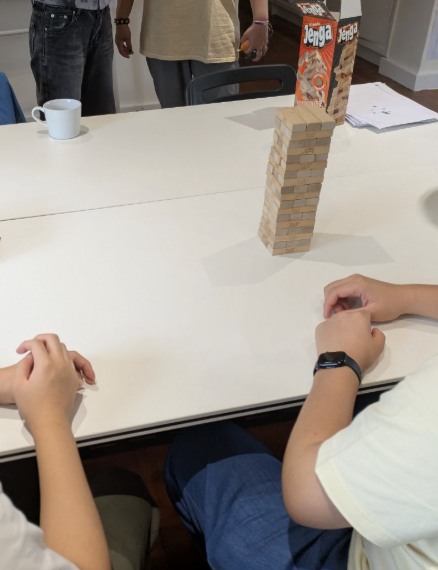
On Monday, we observed and assisted while the residents were taught the "money concept," which included basic math useful for their daily lives. I stood by and helped whenever needed. I found that each resident had unique characteristics that stood out to me. After lunch, we supported the residents in working with photography; they were tasked with recognizing the resident in a photo and labeling them in a logbook. I assisted by creating specifically sized paper cards to serve as these "labels". Earlier in the day, the group held a "morning meeting" where they wrote the daily schedules on a whiteboard, a task they performed quite proficiently.
On the second day, the residents followed a completely different program. An instructor led a movement and dance session for the group. I worked with one resident who did their best to dance according to the instructor's movements, though occasionally they would spin and jump, ignoring their surroundings. I was asked to remind them to stop when this happened and to encourage them to listen closely to the instructor. I thought it was quite an enlightening experience. Following this, the residents gathered in a circle to dance; each did something different, and some impressed me a great deal.
After lunch, the residents were taught about facial features. I assume this was to help them with recognition, as well as to develop an understanding of the human body.
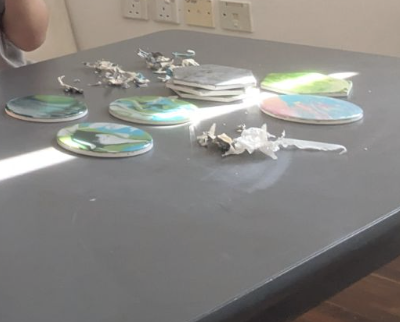
On Wednesday, we gathered in the morning to help remove tape from the residents' crafts. We learned that these items would be sold, and the proceeds would be used to support the residents. The residents were taught to take ingredients from the kitchen and use them to cook pancakes according to a recipe they had copied down beforehand. After lunch, I encouraged the residents to actively note down the recipe displayed on the screen; they needed only minimal help to successfully complete the task.
Thursday was our last day at the Pamela Youde venue. The residents were taught time management, a skill crucial for their daily lives. I assisted by prompting them on what to write in their schedules for the following Saturday. I found that while some could jot down their schedules with no trouble, others needed more guidance and direction, which required me to adapt to each resident’s specific support needs.
Friday was the final day at the Nesbitt Centre; instead of the hospital venue, we went to the centre in Sai Ying Pun. It was the most enjoyable day by far, and a teacher dropped by to see how we were doing. Unlike previous days, we worked with a high-support group. The ways they could express themselves were more limited compared to the low-support groups.
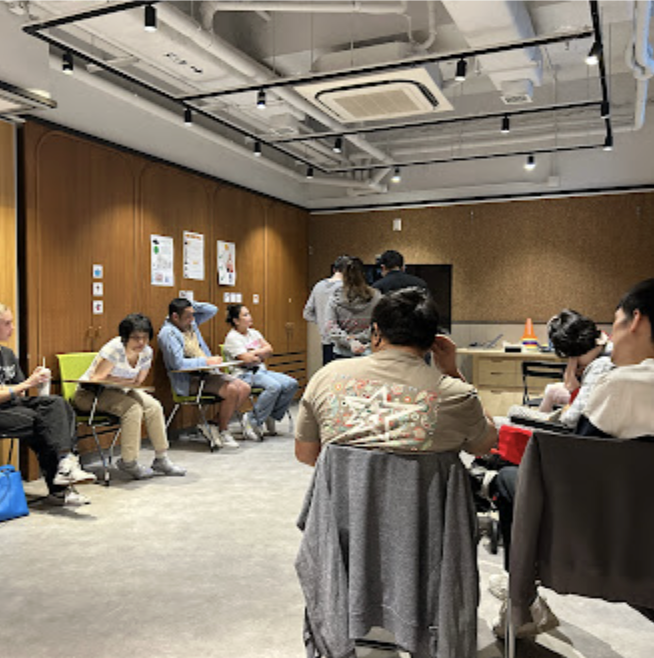
This group practiced meditation after each session and used sign language, which was different from the other groups. I managed to pick up a few signs, such as "music," "break," and "morning meeting". After lunch, there was a music session with drumming and singing, which I found quite enjoyable. I encouraged the residents to participate, and I felt quite successful in doing so
At the end of the day, we were given a short debriefing before being dismissed. We cleaned the cups we used for the milk tea we made during lunch and took one final picture of the centre before leaving for the MTR station.
Personally, I found this to be an enriching experience. It showed me the different characteristics and habits of each resident, and how each required different types of support that I needed to adapt to. It helped me become more understanding and patient, and allowed me to learn more about special needs and how to support them.