ESF uses Typhoon Ragasa as a futile excuse to not show up to work
By Hailey Lee
For an organisation demanding an average school fee of a whopping 170,000 HKD per year, ESF sure does take the education of their students lightly. We must demand better decisions now - our future depends on it.
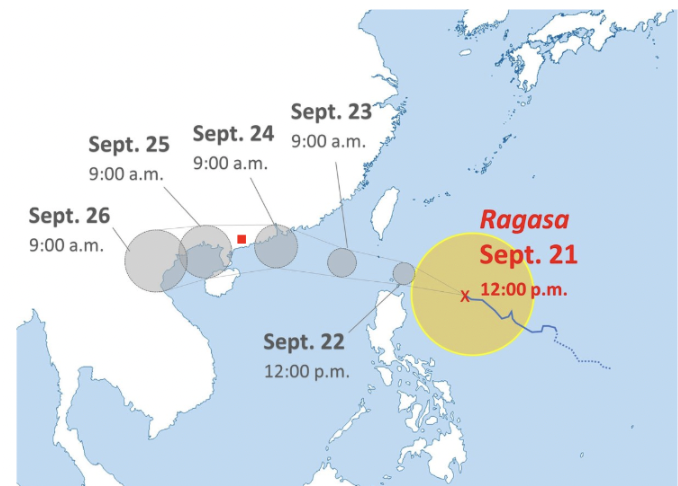
Fig 1. Evidence of Ragasa hitting landfall away from HK (represented by red dot) and dissipating by the 25th. Sept. Grey area is affected area. (The Japan News 2025)
The Hong Kong Observatory issued warnings all across Hong Kong for Typhoon Ragasa, expected to hit on the afternoon of September 23rd, with worsening conditions throughout the 24th. The Observatory advised heavy precautions, comparing Ragasa to the infamous Mangkhut that wreaked havoc upon us in 2018, causing 82 deaths and 138 injuries in Hong Kong alone.
On the 23rd, the EDB canceled school for all of Hong Kong, forcing us, as ESF students, to attend online ‘tyzoom’ instead of in-person lessons. With all the hype and fear the typhoon had generated, citizens of Hong Kong waited in anticipation for the first signs of the beast storm that was meant to make its presence known at 2:20pm, which was when the HKO hosted the T8 signal.
Throughout the day, the whole city was eerily quiet and calm, referred to by many as the calm before the storm and called this an indication of the sheer vigour of the incoming storm. However, fear for Ragasa began to decrease after the signal had been hosted and it had still failed to make its presence known, having seemingly stopped for a coffee break along the way. The EDB had already received backlash from parents for cancelling school rather than simply reducing it to half days with 12:30pm dismissal, so that everyone could be safe at home by 2pm and prepare for the storm, so parents were angered further upon the arrival of the storm, or should I say the lack thereof.
Especially with exam season for local schools just kicking off, Ragasa was a very rude interruption to the student’s preparation: especially as the cancellation of ⅔ of the days was utterly and completely uncalled for. To make matters worse, thanks to our beloved education bureau- we had to sit through the horrors of ty-zoom, also known as absolutely doing nothing but being unable to actually go enjoy the nice weather and the impossibly rare quiet streets. School fees being refunded is unheard of, this I understand- but parents: you cannot seriously be okay with your hard earned money going towards your children staring through a screen at their teachers in their pajamas sipping hot chocolates.
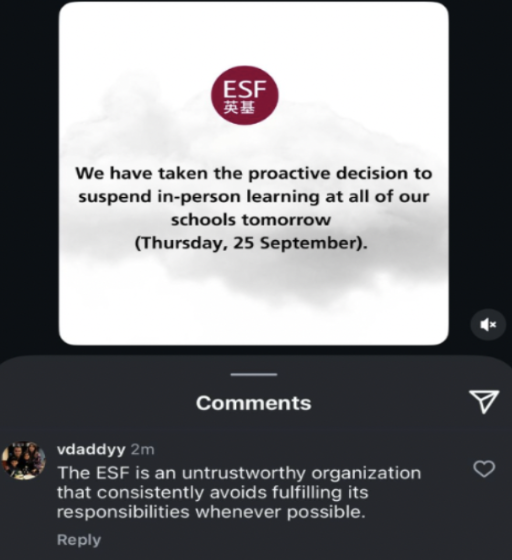
Fig. 2: negative feedback from a passionate parent towards ESF on suspension of lessons on the 25th Sept. (ESF, 2025)
Following the city-wide school cancellation on 23rd - 24th issued by the EDB, schools were given the choice for 25th. We can all guess which path ESF took. As ESF CEO Belinda Greer stated, their decision to cancel school was “not one we take lightly,” but one that supposedly allows for clearing debris and preparing schools for safe returns. If the “damages” were so severe, why did most local schools, which value education, remain open? It’s worth noting that ESF was the only major organization to make such a “proactive” decision. Greer also stated that they ‘do not yet fully understand the impact on the transport network’ (ESF, 2025). Well guess what? The transport network such as the MTR, which is mostly outdoor and encompasses most of Hong Kong, might I remind you, was able to resume almost instantly, leaving ESF no valid excuse for not opening schools other than the teachers and workers alike are quite frankly, lazy.
While some rural residents may have faced difficulties reaching school, it is unfair to deny those who could attend the opportunity to learn. I met with a friend from Sai Kung on the 25th, who confirmed that buses were running and roads were cleared. A quick Google search showed that transportation throughout the city resumed quickly. Come on ESF, the least you can do is your research…
The decision by the ESF to cancel school during what turned out to be a largely uneventful typhoon was not just an overreaction; it was a disservice to students who were eager to learn and prepare for their exams. While safety should always be a priority, this decision reflects a troubling lack of confidence in ESF’s ability to manage situations effectively, while the rest of the city seemed to have no trouble at all. The students who were eager to learn were robbed of valuable educational opportunities, forced to endure the tedium of online classes while the sun shone brightly outside. It’s high time for the ESF to reconsider its policies and to prioritize the education and well-being of its students over an abundance of caution. After all, if we’re going to promote the preparation for the future, we must first ensure that our students have the chance to thrive in the present. Let’s hope that next time, ESF will make smarter decisions that will reinforce their mission to ‘inspire creativity and nurture global citizens and leaders of the future’. After all, the world is in trouble if our “leaders of the future” are taught to throw in the towel at the first sign of a storm, whether literal or metaphorical.