U.S. Sends Delta Force to capture the President of Venezuela
By Ray Fung & Darius Chau
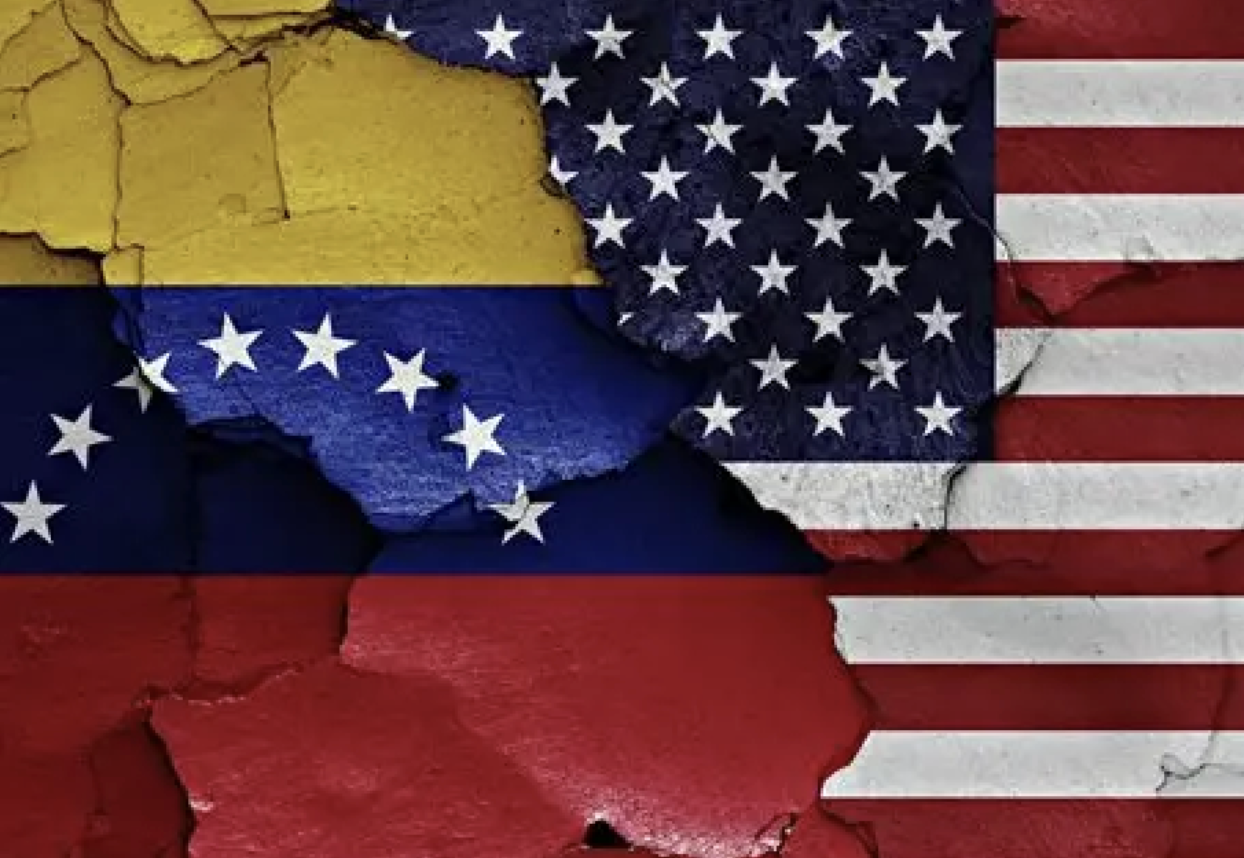
On November 29 2025, The United States of America declared the closure of Venezuelan airspace where President Donald Trump announced that all airspace above and around Venezuela should be considered shut down from that day, marking a significant escalation in U.S. pressure on the government of President Nicolás Maduro. The stated reasons behind the closure were to target drug trafficking and human smuggling operations and to signal a tougher stance against President Maduro, whom Washington alleges of collaborating with narco-terrorist groups.
“To all Airlines, Pilots, Drug Dealers, and Human Traffickers, please consider the airspace above and surrounding Venezuela to be closed in its entirety,” Trump wrote. “Thank you for your attention to this matter! President Donald J. Trump”
The Federal Aviation Administration (FAA) has recently issued a security notice stating “a worsening security situation” increased military activity and interference with GPS poses risk to flights, warning airlines and pilots to avoid flying near the Venezuelan Airspace. Shortly after, Venezuela responded by revoking operating rights for six of the biggest international airlines which had suspended flights to the country following the warning issued by the FAA.
This airspace declaration marks a dangerous turning point in the long-running confrontation between the United States and Venezuela. Since 2019, the U.S. has refused to recognise Maduro as the constitutional leader of Venezuela, instead opting to recognise opposition figure Juan Guaidó as Venezuela’s interim president and imposing severe economic sanctions on Maduro’s government. In 2024, following another presidential election, the U.S. chose once again to reject the election results and recognise opposition figure Edmundo González as president-elect, despite Maduro remaining the head of state in power.
The U.S. has previously taken aviation-related measures against Venezuela, including sanctions on the state-owned airline Conviasa and advisories against flight over Venezuelan airspace due to alleged safety concerns. However, a declaration to fully close another sovereign nation’s airspace is a significant and unprecedented escalation, widely viewed as a breach of international law.
Seeing this dramatic escalation, many would question the legality of this unilateral closure. Experts on international law and aviation have almost unanimously condemned the move on the basis of the Chicago Convention of 1944, which clearly states that every state has “complete and exclusive sovereignty over the airspace above its territory,” and that only the United Nations Security Council can authorise any action against the airspace of a sovereign state, which it has not done.
CodePink, an anti-war advocacy group, stated: "The United States has no authority to close another country’s airspace. Under international law, only Venezuela can determine the status of its skies."
In the days following the announcement, it appears that there is an inconsistency between Trump’s announcement and formal action to enforce the closure. While Trump’s statement was unmistakable in its meaning, the FAA Notice to Airmen following the announcement did not impose closure with active enforcement, but rather issued a “Do Not Fly” advisory to signal danger due to potential risk.
The U.S. military has not publicly confirmed any orders to intercept or ground civilian aircraft flying over Venezuela either, suggesting that the declaration may function more as a political move with a “threat of closure” than a formal military directive, though most airlines, except for several small carriers, have heeded to Trump’s call and have avoided flying over Venezuelan airspace, fearing enforcement or backlash from U.S. authorities.
The international reaction has been swift and critical. Venezuela denounced the move as a “colonialist threat” and “illegal aggression,” calling for global condemnation from the United Nations and allies. The UN in response urged all countries to respect international civil aviation laws under the Chicago Convention, expressing deep concern over U.S.-Venezuela tensions.
Regional allies, including Colombia and Cuba issued statements criticising the U.S. overreach and Iran expressed “serious violations of international law”. Major aviation carriers from Europe, Latin America, and the United States have self-enforced the airspace closure, suspending all flights to Venezuela and rerouting to avoid Venezuela’s airspace at significant financial and operational costs.
Venezuela’s capital, Caracas and its Maiquetía International Airport now functions in close to complete isolation, only handling minimal flights to regional destinations. In a defensive countermeasure, Venezuela has revoked the operating rights of six foreign airlines, triggering a diplomatic deadlock, leaving aircraft, crews and passengers stranded as tensions mount.
Political analysts see several objectives behind Trump’s move. First, it is a maximum-pressure tactic aimed to fracture any remaining support for Maduro by further isolating the country internationally. Second, it refocuses domestic attention away from internal issues and on a hawkish foreign policy stance.
However, analysts also see the enormous risks behind the move. By acting unilaterally, the U.S. has undermined the international legal order it has helped build and enforce. It also forces neutral countries and corporations to choose sides, possibly accelerating the breakup of global governance. Lastly, it creates a palpable risk of an accidental military incident if a civilian or military aircraft tests the vague boundaries set by the Trump administration.
The unilateral closure of Venezuelan airspace by the United States represents more than a political escalation in a bilateral dispute. It is a challenge to the principles of international sovereignty and law.
While the move is framed as a measure of national security, the action has basically imposed a semi-blockade, isolating the nation and its people without the backing of international bodies. The divide between the forceful political declaration and its ambiguous aftermath shows that it is part of a strategy reliant on economic and diplomatic coercion rather than legitimate legal authority.
Airlines rerouted, passengers stranded, diplomatic channels frozen, showing the stark immediate consequences. The real danger however is the precedent that it sets: it normalises the situation where powerful larger states can employ illegal means to interfere in smaller state’s internal and political affairs, eroding the frameworks set by the United Nations and agreed to by all nations to prevent conflict and protect each nation’s sovereignty.
Therefore, the standoff for Venezuela’s skies is closely watched by the international community and the precedent it sets for the future of the global order.