The whimsical world of Eric Carle
By Hailey Cheng

A peculiar way to begin this article is to close your eyes and envision this in your mind’s eye: a vibrant little world characterized by all things whimsical, built from layers of hand-painted paper, bursting with bold, textured collage art. From afar, one might spot a green and red caterpillar with a hungry eye for scrumptious fruits, and in the distance, one might notice a brilliant brown bear—an inviting and vibrant presence quietly observing colors and other animals in this eccentric realm. The master behind this zany world is none other than illustrator Eric Carle, whose every brushstroke invites children and adults alike to explore nature, celebrate friendship, and embrace the joyous magic of storytelling. This article serves as a time capsule, providing tangible insight into who this jolly individual was, the development of his renowned art style, and the artistic process behind his creations.
Whimsical Eric was born on June 25, 1929, in Syracuse, New York. His parents, Erich and Johanna Carle, were childhood sweethearts who had emigrated from Germany a few years prior. Eric Carle spent his early childhood exploring the woods and hunting for insects of all sorts with his father. The Carle family deeply enjoyed weekend camping, fishing, and boating in the nearby Finger Lakes region of upstate New York. He credited this joyful, sun-filled introduction to nature as the whimsical spark that inspired his globally loved illustrations.
Life in Syracuse was quite splendid for Eric. He began school in 1935 and, years later, recalled a sun-filled classroom with large sheets of paper and colorful paints in different hues. His kindergarten teacher, Miss Frickely, deeply encouraged Carle’s artistic abilities and advised his parents to do the same. “While I cannot remember her face,” the jolly man stated years thereafter, “I can still recall her kind presence and the bright paints and brushes and the large white sheets of paper in her sunlit classroom.”
Little Eric spent his first-grade years in Stuttgart, Germany, with the new school atmosphere sharply contrasting with his formative one: he recalled “small rooms, narrow windows, hard pencils, small sheets of paper, and a stern warning not to make mistakes.” From that moment on, he yearned to return to America.
One day in 1939, while visiting the Black Forest, the Carle family learned that Germany had invaded Poland. They received drastic news: World War II had just begun. Within weeks, Carle’s father was conscripted into the Wehrmacht, the German army. He was later captured in Russia and held prisoner, not returning until several years after the war ended. Because Stuttgart was a center for industry, railroads, and the military, it became one of the key targets for the Allies. Carle’s schooling was fragmented, and twice he and other children from Stuttgart were evacuated to the countryside.
One of the highlights of Carle’s school years was art class with a teacher named Herr Kraus. Once, Herr Kraus invited Carle into his home to show him what the Nazis called “degenerate” art by masters like Pablo Picasso, Paul Klee, and Wassily Kandinsky.
“Their strange beauty had almost blinded me,” Carle remembered. “At great personal risk, my art teacher quietly defied the regime, so that a 12-year-old boy who loved colors, shapes, and lines would be able to experience the wonder of an art he had until then not even known existed.”
After the war, Carle enrolled in the Akademie der Bildenden Künste in Stuttgart, where he studied commercial art under the guidance of Professor Ernst Schneidler. Carle later noted that “those four years were the most inspiring and exciting years of my artistic schooling.” While working as a graphic designer in Stuttgart, the simplicity and strong contrasting elements of the posters Carle designed provided a blueprint for his children's books in later years.
In the late 1960s, a well-respected educator and author by the name of Bill Martin Jr. spotted one of Carle’s advertisements featuring a red lobster:
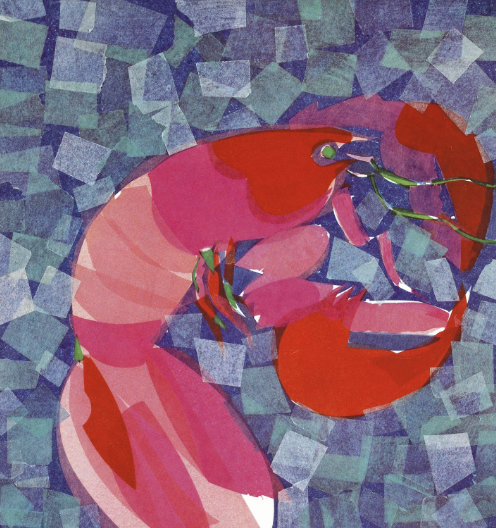
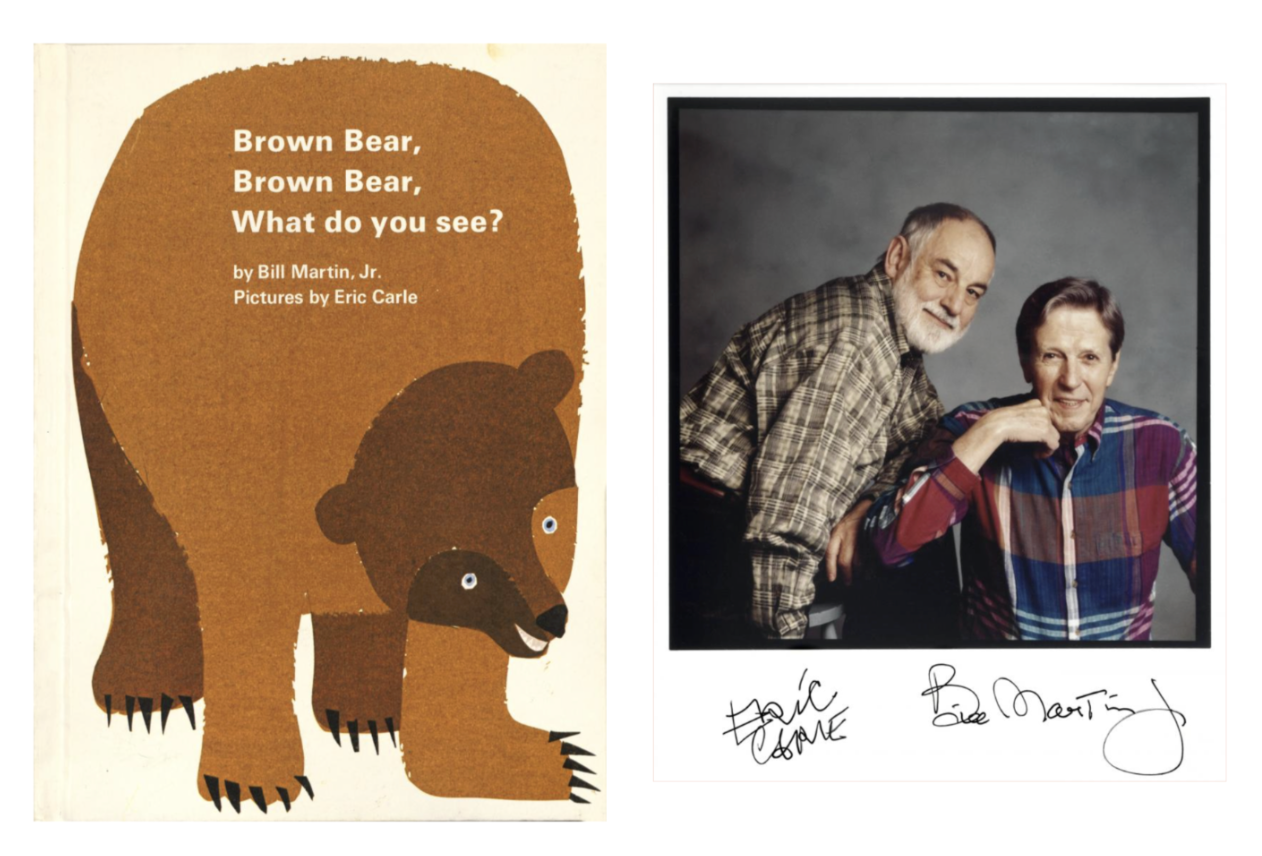
“The art was so striking,” said Martin, “that I knew instantly I had found the artist to illustrate my next book.” Could you guess Carle’s next book illustration then? It was none other than Brown Bear, Brown Bear, What Do You See?, published in 1967. Carle later stated, “The opportunity to illustrate this book changed my life,” with his colorful parade of animals encouraging learning, memory, and imagination.
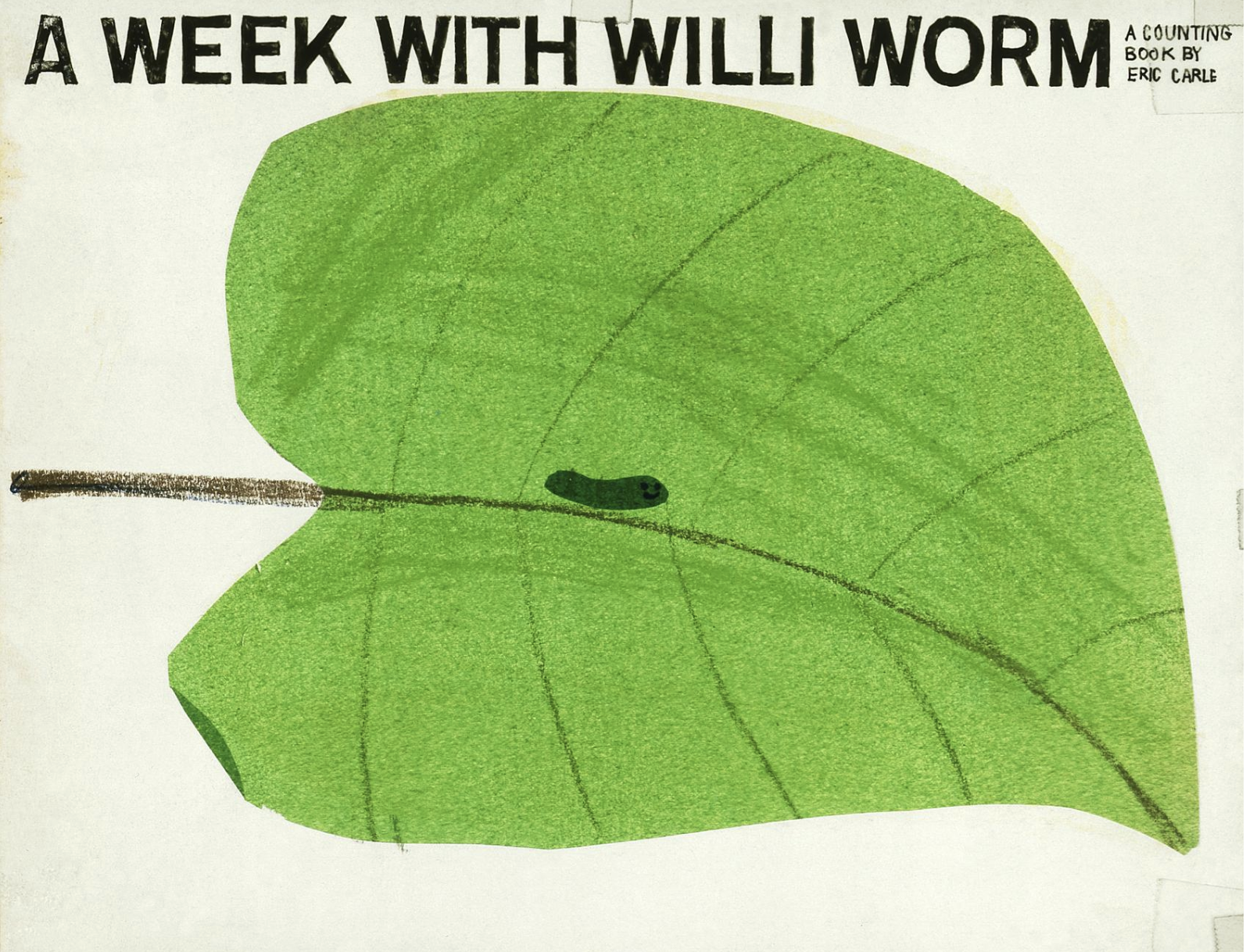
One day, while playing with a hole puncher, Carle observed that the hole patterns resembled a bookworm in his whimsical mind. With this idea, he proposed a story called A Week With Willi Worm to his editor, Anne Beneduce. Unsure about a worm, Anne suggested a caterpillar instead. “A butterfly!” Carle exclaimed. The famous story The Very Hungry Caterpillar was published in 1969, becoming Carle’s most celebrated work. He came to believe that this story was one of hope, believing that, like the caterpillar, children will grow up and spread their wings. By incorporating a unique sensory feature into each story, he transformed the traditional picture book into an interactive object—or as he put it, “a book you could play with, and a toy you could read.”
To create his signature collages, Carle painted acrylic onto white tissue paper to achieve vibrant colors and one-of-a-kind patterns. Each piece was an abstract work that he would cut and layer into collage art. “There are many different media to work in. I just happen to like collage. I enjoy the process of gluing the pieces down in a picture,” said Carle. “I am very interested in details, brushstrokes in a painting, and textures. So the process of painting my tissue papers is very satisfying to me.” Through these simple layers of paper and glue, Carle did more than just illustrate children’s books—he built an enduring legacy based on color and creativity. Today, his whimsical world continues to remind us that no matter how small we start, we all have the potential to spread our wings and fly.